Dr. Dimple Jindal Official Website
The Billionaire's Mindset: What Cosmo's 30-Day Journey Reveals About How the Greatest Entrepreneurs Actually Think
Mindset & Philosophy · 10 min read · 2026-01-12
What do the world's most consequential builders actually believe about how to live and how to build? The answer — distilled through Zuko's 30-day curriculum — is more surprising, more accessible, and more demanding than the mythology suggests.
Article Summary
What do the world's most consequential builders actually believe about how to live and how to build? The answer — distilled through Zuko's 30-day curriculum — is more surprising, more accessible, and more demanding than the mythology suggests.
Full Article
There is a question worth asking seriously: what do the most extraordinary builders of the modern era — those who have created companies, institutions, and ideas that have fundamentally altered the way human beings live and work — actually believe about how to live and how to build?
Not what they say in polished interviews or keynote addresses. Not the curated mythology. What their actions, over decades of consequential decision-making, actually reveal about their deepest operating principles.
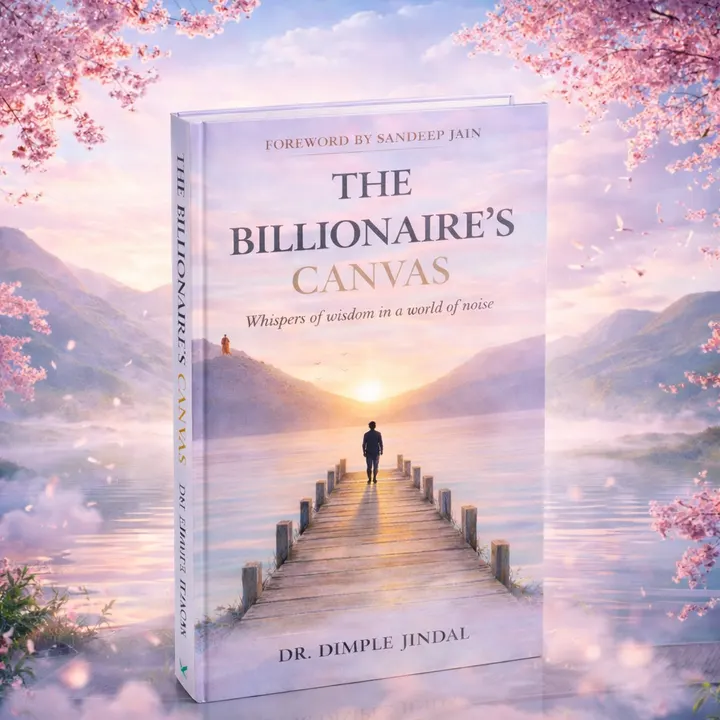
This is the question that drives every chapter of The Billionaire's Canvas — and the answer Zuko's 30-day curriculum delivers is neither the "hustle harder" gospel of the Gray Market nor the "renounce the world" prescription of the spiritual retreat. It is something more demanding, more integrated, and more human than either.
The First Principle: Clear Thinking Is the Competitive Advantage That Cannot Be Bought
Across the diverse careers and personalities of the world's most consequential builders — from Charlie Munger to Sara Blakely, from Jeff Bezos to Patagonia's Yvon Chouinard — one trait appears with unusual consistency: an obsessive commitment to the quality of their thinking.
Charlie Munger spent decades developing what he called a "latticework of mental models" — the most important and durable ideas from the major disciplines of human knowledge, held simultaneously in mind and applied to the problems of investment and business judgment. His central insight: most errors in business and investment are not informational failures. They are cognitive failures — systematic, predictable biases in how human minds process information, which can be identified, named, and partially compensated for.
Jeff Bezos's famous "working backwards" methodology is a structured thinking tool for forcing clarity before commitment: write the press release for the finished product before writing a line of code. Define the customer experience before building the operational infrastructure. The discipline imposed by beginning with the end state is the discipline of clear thinking applied to the problem of innovation.
Zuko teaches this principle through the practice of the "Mirror of Truth" — a sustained, honest examination of your actual situation, stripped of the comforting fictions that most people apply to their circumstances. Cosmo's Financial Autopsy is a Mirror of Truth exercise: not a budget (which tells a reassuring story about the future) but a forensic examination of where the money actually went, why it went there, and what the structural patterns of the spending reveal about the health of the underlying business.
"The canvas is cluttered with fear," Zuko tells Cosmo on the first day. "And you cannot paint the future on a canvas cluttered with fear. Empty the canvas first. Then we will see what is actually there."
The Second Principle: Long-Term Orientation Is the Strategy That Compounds Silently
The most consistently underrated characteristic of extraordinary builders is their relationship to time.
Amazon was unprofitable for most of its first decade. Bezos told his investors from the beginning that profitability was not the relevant metric for the timeframe he was operating within — market position and long-term customer trust were the metrics, and they were being built, compounding invisibly, while the quarterly numbers looked unremarkable.
Warren Buffett's investment philosophy is the same principle applied to the selection of businesses: identify a company with durable competitive advantages and a management culture characterized by integrity, and then hold it for decades, allowing the compounding to work without interruption.
The Sangha builds Shadow-Light not for the initial sale but for the Advocate ecosystem — the Mrs. Gables who become, through genuine relief of real pain, the most powerful distribution channel available. Each Mrs. Gable is the beginning of a compounding trust network. The short-term revenue of giving her the first unit for free is nothing compared to the long-term value of the Pillar of Faith she represents.
The Gray Market optimizes for the next quarter. The Saffron business optimizes for the next decade. Both are coherent strategies. Only one is the strategy of the genuinely extraordinary.
The Third Principle: Values and Strategy Are the Same Thing
The most consequential builders do not experience their values as constraints on their strategy. They experience them as the source of their strategy.
Patagonia's founder Yvon Chouinard built a company whose environmental commitments are not marketing positions layered over conventional business practices. They are the organizing principle of every operational decision — from materials sourcing to supply chain transparency to the "Don't Buy This Jacket" campaign that told customers to buy less. The values are the strategy. And the strategy has made Patagonia one of the most trusted and profitable outdoor brands in the world.
The commercial logic of values-integrated strategy is straightforward: a business whose values are genuine attracts employees who share them (which reduces recruitment costs and increases retention), customers who become advocates rather than transactions (which reduces acquisition costs and increases lifetime value), and institutional trust that is extraordinarily valuable precisely in the moments when it is most needed — in crises, in failures, in the moments when character is tested under pressure.
Zuko insists on this integration throughout the 30-day program. The Pillar of Faith is not a marketing strategy. It is a moral commitment. The Sangha Principle is not an organizational chart. It is a philosophy of human dignity. The Saffron Philosophy is not a positioning framework. It is an ethical stance on what kind of value is worth creating.
The billionaire's mindset, at its deepest level, is not a growth mindset or an abundance mindset or any of the other reductive labels applied to it. It is a values-integrated mindset — the experience of one's deepest convictions and one's most strategic thinking as the same thing, operating from the same source.
The Fourth Principle: Attention, Protected and Directed, Is the Fundamental Resource
Beyond the organizational and strategic principles, the most thoughtful extraordinary achievers share a personal practice that is rarely discussed in the standard success literature: they protect their attention with unusual deliberateness.
Warren Buffett maintains a calendar that is almost entirely unscheduled — not because nothing demands his time, but because he understands that his judgment is his product and his judgment requires long, uninterrupted periods of reading and thinking to remain sharp.
Bill Gates takes two "Think Weeks" per year — solo retreats during which he reads, thinks, and makes no operational decisions. The explicit purpose is to maintain the quality of the strategic thinking that his role demands by protecting the conditions under which that thinking becomes possible.
Jeff Bezos protects his mornings for his highest-priority thinking, scheduling meetings only in the afternoon after his cognitive resources have been oriented toward his own work rather than others' agendas.
These are not quirks. They are the recognition that for a person whose primary contribution is the quality of their judgment, the protection of the conditions for clear thinking is the most important operational decision they make.
Zuko enforces this through the architecture of the sanctuary — the absence of screens, the rhythm of meditation, the practice of silence before speech, the requirement that each member of the Sangha engage with their experience before reacting to it. "The Reactive Mind has no defence because it has no shape," he tells Cosmo, standing before the Uncarved Block. "The market knows this. The Gray Market will chip you all day long if you let it."
The Synthesis: Building and Living as the Same Practice
What emerges from Zuko's 30-day curriculum — and from the biographical study of the world's most consequential builders — is a philosophy that is simultaneously ambitious and grounded, rigorous and humane.
It holds that the quality of thinking is the competitive advantage that cannot be purchased. That the timeframe within which you operate is a strategy, not a circumstance. That values and strategy, when genuinely integrated, reinforce rather than limit each other. That attention, protected and directed with care, is the foundation upon which everything else is built.
It is a philosophy that is available to everyone, and most people will not choose it — not because it is intellectually difficult, but because it is uncomfortable. It requires clarity about what actually matters. It requires the discipline to protect that clarity against the constant demands of the Gray Market. It requires the patience to compound slowly in a culture that celebrates the dramatic and the immediate.
Cosmo learns it in thirty days, on a mountain, in indigo robes, with a battered copper bowl and a single thread of saffron.
The mountain is available. The bowl is empty, waiting.
The only question is whether you are ready to climb.
Author
Dr. Dimple Jindal is the author of The Billionaire's Canvas: Whispers of Wisdom in a World of Noise, a business fiction novel about the Saffron Philosophy, ethical wealth, and meaningful success.
Related Reading
Continue with The Art of Focus: Why Your Attention Is Your Scarcest Resource — and How to Protect It in the Age of Digital Noise or The Billionaire's Canvas: Why the Journey Begins at the Edge of Noise. Then visit the Green Ledger, Digital Dharma, and Success, Wealth and Happiness guide to connect this essay with the wider Saffron Philosophy.